Format check / cat nook
Automatic vs. traditional litter boxes for compact homes
A format-level comparison using one automatic unit and one open pan as dimensioned references rather than category-wide averages.
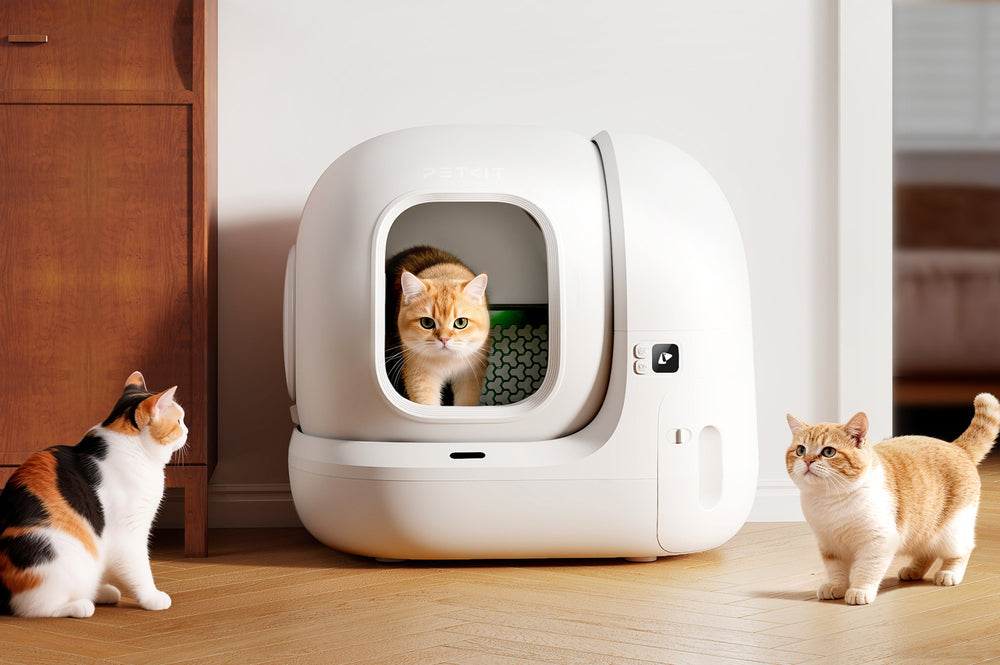 PETKIT · reference
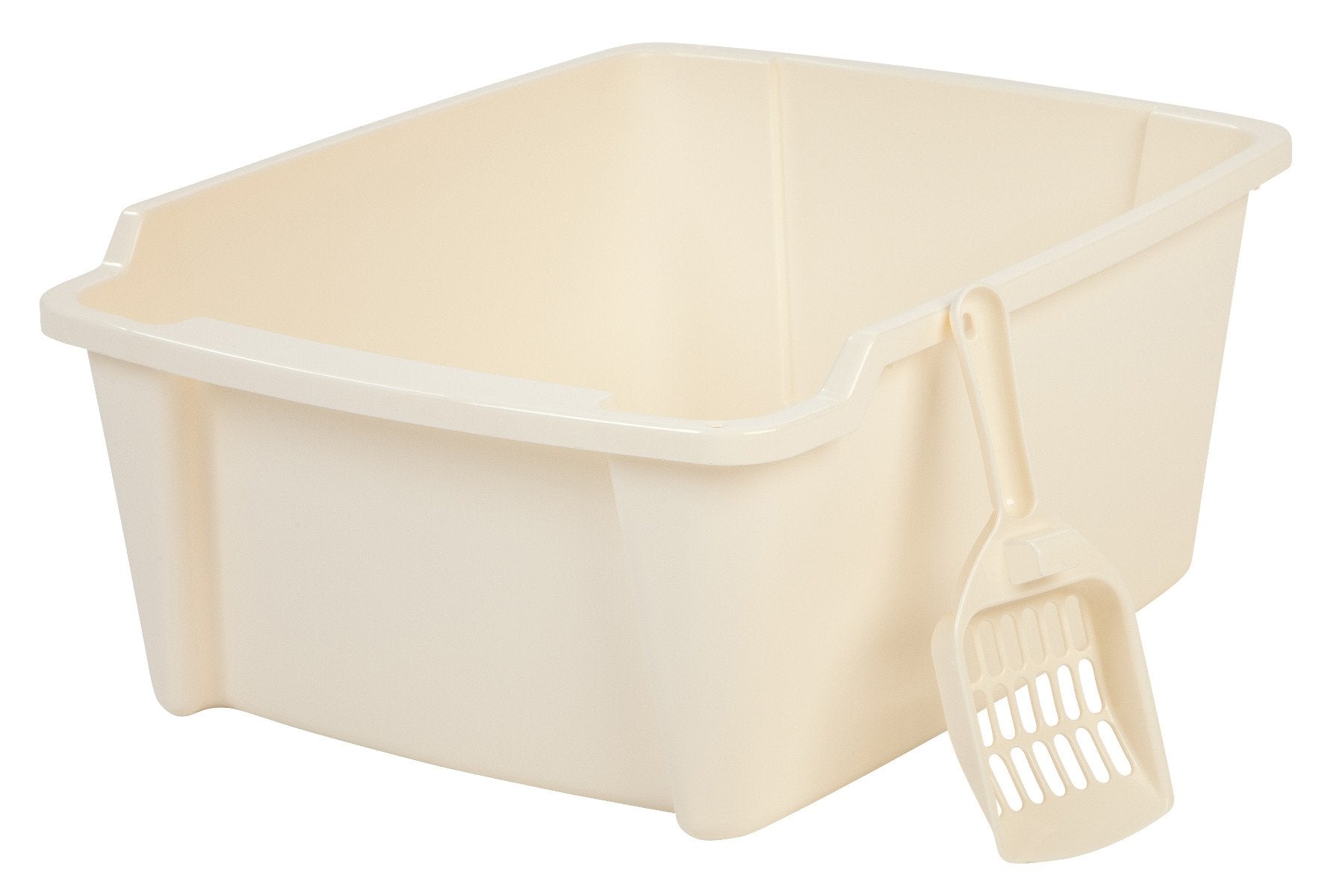 IRIS USA · reference
Decision snapshot
Start with the room signal.
Choose the automatic format when its larger powered system and service route fit; choose the open pan when compact size, direct access, and a fully manual routine fit better.editor-assessed
Read the complete direct answer
Choose an automatic litter box when its larger body, power needs, cat-access limits, and part-cleaning route fit the room and reducing repeated scooping matters enough to justify the extra system. Choose a traditional open pan when compact dimensions, immediate visual access, easy relocation, and operation without power are the stronger constraints. As references, PETKIT lists the PuraMax 2 at 24.41 by 21.18 by 21.73 inches, while IRIS lists its high-sided open pan at 18.9 by 14.9 by 7.9 inches. Those examples do not represent every model, but they expose the real decision: automation changes the work rather than erasing it. Measure the exact candidate, confirm the cat can enter comfortably, and compare the complete cleaning path before deciding which format fits the home.
editor-assessedBest fit signal
A household that can tape out both exact candidates and compare cat access, power, daily waste work, washing, and fallback needs.editor-assessed
Pause signal
Pause if the exact candidates' dimensions, litter compatibility, access limits, or cleaning instructions are unavailable.editor-assessed
- Automatic reference
- PuraMax 2: 24.41 × 21.18 × 21.73 inmanufacturer-stated
- Open-pan reference
- IRIS high-sided pan: 18.9 × 14.9 × 7.9 inmanufacturer-stated
- Work shift
- Automatic cycling moves clumps to a bin; open-pan waste work stays manualeditor-assessed
How we checked
Evidence before recommendation.
This page checks room constraints against 3 dated manufacturer sources. Manufacturer-stated and retailer-listed facts remain separate from editor-assessed room tradeoffs. It does not claim hands-on testing, current price, rating, stock, or universal fit.
Source boundary
3 dated sourcesEvery reference stays visible in the source trail.Decision boundary
2 reference formatsReference products anchor checks; they are not a ranked shortlist.Freshness boundary
Access dates do not guarantee unchanged specifications.Reference fit passport
Put the reference beside the room.
These reference formats make dimensions and setup constraints concrete. They do not prove that every model, room, routine, or user will fit.
PETKIT
PuraMax 2
Automatic-format reference
- Exterior size
- 24.41 × 21.18 × 21.73 inmanufacturer-stated
- Placement
- Hard, level floor; at least 2 in from the wallmanufacturer-stated
- Cat access
- 7.87-in entrance; listed range of 3.3–22 lbmanufacturer-stated
- Power and setup
- Powered automatic cycle with sensors and app-connected operationmanufacturer-stated
- Maintenance
- Waste-bin service, litter refill, and detachable-part cleaning remain requiredmanufacturer-stated
Best fit
A measured powered nook where reducing repeated hand-scooping justifies the larger system and structured service routine.
editor-assessedFailure condition
It fails when the room, cat, power, or removable-part route does not meet the exact model's requirements.
editor-assessedIRIS USA
Open-Top Cat Litter Pan — High Sided
Traditional open-pan reference
- Exterior size
- 18.9 × 14.9 × 7.9 inmanufacturer-stated
- Format
- Open top with high sides and an included scoopmanufacturer-stated
- Power and setup
- No power, network, sensor calibration, or appeditor-assessed
- Maintenance
- Manual scooping, emptying, washing, and dryingeditor-assessed
Best fit
A smaller nook that favors direct inspection, easy repositioning, and a simple unpowered vessel.
editor-assessedFailure condition
It is a weak fit when the household cannot sustain the fully manual scoop-and-wash routine.
editor-assessed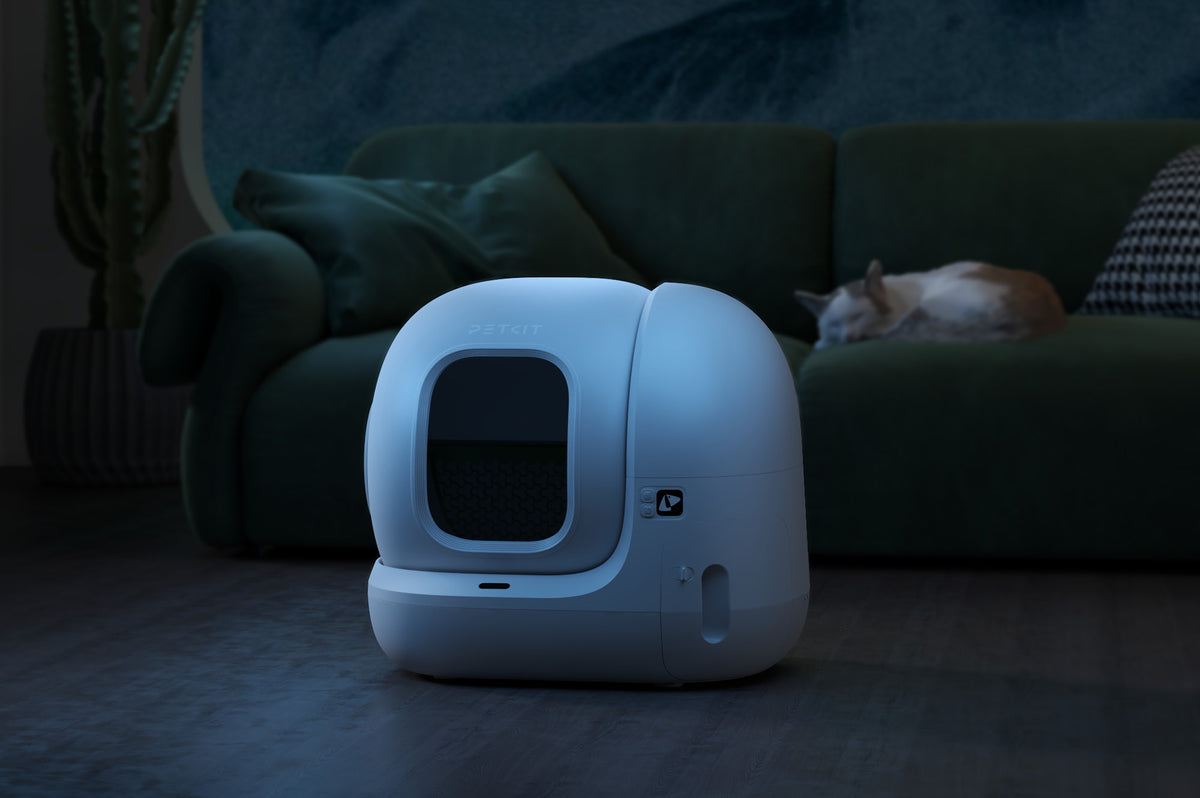
Constraint detail
PETKIT PuraMax 2 automatic litter box illuminated in a bedroom at nightManufacturer image · reference context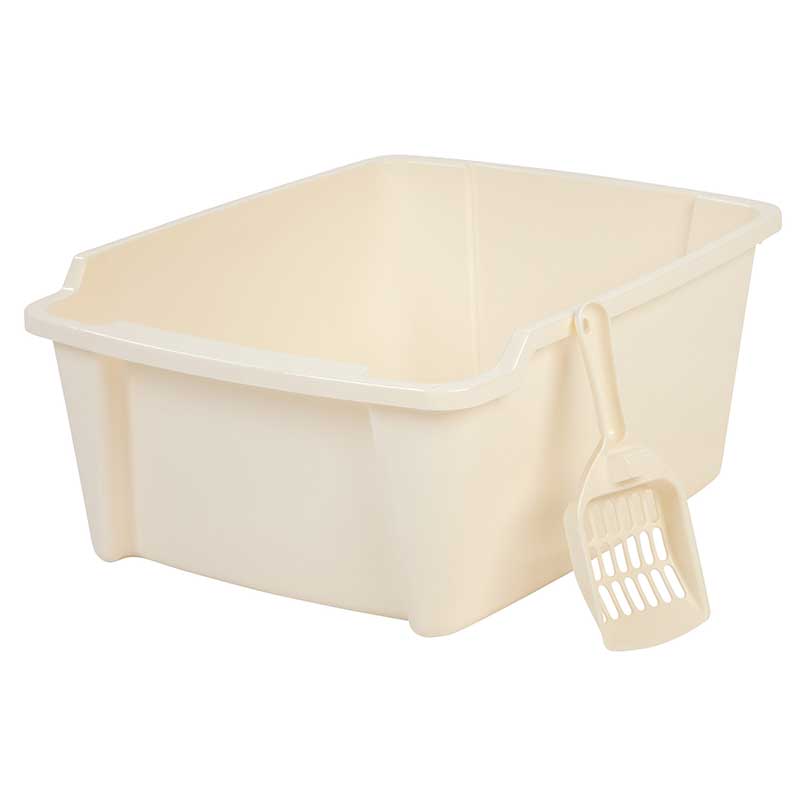
Constraint detail
White IRIS USA high-sided litter pan and scoop shown togetherManufacturer image · reference contextFit, pause, tradeoff
The conditions that change the answer.
Best for
- Readers deciding between powered self-cleaning and simple open-pan formats before choosing a specific model.editor-assessed
- Compact-home layouts where exterior dimensions and the cleaning route can be measured directly.editor-assessed
- Cat households willing to compare access, observation, routine, and failure states rather than one convenience feature.editor-assessed
Avoid if
- You are trying to infer that every automatic or every traditional box shares the reference dimensions and features.editor-assessed
- A cat has unresolved access or elimination changes that require individualized professional guidance rather than a product-format comparison.editor-assessed
- The exact candidate's manual, dimensions, litter compatibility, and cleaning instructions are unavailable.editor-assessed
Main tradeoff
Automatic boxes exchange some hand-scooping for a larger powered system with sensors and detachable parts; open pans keep the system simple and visible but preserve the manual scoop-and-wash routine.
editor-assessedChoose by constraint
Which format absorbs the job?
Main difference
The automatic format shifts some repeated scooping into a powered waste-cycling system; the traditional format keeps the mechanism and every cleaning action manual.
editor-assessedChoose Automatic litter box if
- The exact powered unit fits with service clearance and its access limits work for every intended cat.editor-assessed
- Reducing hand-scooping is worth taking on power, setup, moving parts, bin service, and model-specific cleaning.editor-assessed
Choose Traditional open pan if
- The room favors a smaller, unpowered vessel that can be inspected and repositioned directly.editor-assessed
- You prefer a fully manual routine with no sensors, app, powered cycle, or separate waste drawer.editor-assessed
Constraint table
Put the room beside the claim.
| Factor | Decision signals | Why it matters | Evidence | |
|---|---|---|---|---|
| Reference exterior size | Automatic reference 24.41 × 21.18 × 21.73 inches for PuraMax 2. | Open-pan reference 18.9 × 14.9 × 7.9 inches for the IRIS high-sided pan. | These sourced examples show why exact candidate measurements matter; they are not category averages. | manufacturer-stated |
| Daily waste work | Automatic Cycles clumps into a waste container, which still needs inspection and emptying. | Traditional Keeps scooping and waste removal fully manual and immediately visible. | Automation changes the frequency and shape of the task; neither format removes waste management. | editor-assessed |
| Power and setup | Automatic Requires a level powered placement and model-specific setup. | Traditional Uses no power, network, sensor calibration, or app. | A power or setup issue is an additional failure state in a small room with few placement choices. | manufacturer-stated |
| Cat access | Automatic reference Lists a 7.87-inch entrance and a 3.3–22 pound supported range. | Open-pan reference Has an open top with no powered entrance or maker-listed cat-weight gate. | The room fit is incomplete until the entry and interior work for each individual cat. | manufacturer-stated |
| Cleaning path | Automatic Requires removal and drying of model-specific detachable parts; the base is not rinsed. | Traditional A single open pan can be emptied and washed as one simple vessel. | The distance to disposal, sink, drying space, and reassembly area can decide the better compact-home fit. | manufacturer-stated |
| Observation and fallback | Automatic Adds status information and programmed behavior that must be checked and understood. | Traditional Keeps litter condition directly visible and can remain as a transition fallback. | The simpler format can provide continuity while a cat adjusts or a powered unit is being serviced. | editor-assessed |
Before opening a listing
Run the physical check.
- Tape out both exact candidates, including wall, entry, scoop, bin, and removable-part clearance.
Exterior dimensions alone omit the human operating zone around each format.
editor-assessed - Write the real seven-day routine for scooping, bin emptying, litter refill, inspection, and washing.
A task list makes shifted maintenance visible instead of labeling one option maintenance-free.
editor-assessed - Check each cat against entrance height, body room, floor stability, and transition needs.
Product-format convenience never overrides physical access for the animal.
editor-assessed - Keep a workable fallback for power loss, cleaning, service, or slow adoption.
A fallback prevents one powered mechanism from becoming the only available bathroom option.
editor-assessed
Known limits
What this page cannot prove.
- This comparison uses one sourced model per format and does not claim that their dimensions describe the whole category.editor-assessed
- We have not observed the user's cat, room, litter choice, cleaning habits, or tolerance for noise and moving parts.editor-assessed
- Manufacturer statements describe intended operation; frmedit has not independently tested reliability, odor control, or long-term upkeep.editor-assessed
Buyer questions
Questions that deserve a direct answer.
Does an automatic litter box eliminate scooping?
The reference unit automatically moves clumps into a waste container, but the user still inspects the box, empties waste, adds litter, and cleans parts. The work changes rather than disappears. manufacturer-stated
Which format occupies less space?
In these references, the IRIS open pan is smaller than the PuraMax 2. Do not generalize from two models; measure the exact candidates plus operating clearance. manufacturer-stated
Which format is easier to move?
A simple open pan has fewer connected parts and no outlet dependency, so it is usually the simpler format to reposition. Confirm the actual product's weight and contents first. editor-assessed
Can I remove the traditional box as soon as the automatic one arrives?
A gradual transition with a familiar fallback is the more resilient room plan. PETKIT's own transition guidance starts the new unit where the previous box was and encourages patience. manufacturer-stated
Does the automatic option need Wi-Fi to clean?
PETKIT says preset operation can continue without a network connection, while app usage data will not update during the loss. Initial setup and feature access still need model-specific review. manufacturer-stated
Visible evidence
Source trail.
Source access dates describe when frmedit reviewed the page. They do not prove that a merchant term, model, or specification has remained unchanged since then.
Accessed 2026-08-24
PETKIT Automatic Litter Box Guide — PuraMax 2 Section
PETKIT · Supports: Listed exterior dimensions, unit weight, entrance height, and supported cat-weight range, PuraMax 2 entrance, supported cat range, waste system, and app-connected operation, Clumping-litter guidance and detachable cleaning-part overview
Accessed 2026-08-24
PURA MAX 2 Self-Cleaning Cat Litter Box User Manual
PETKIT · Supports: Manufacturer dimensions, floor placement, wall clearance, and setup instructions, Automatic-cleaning controls and user maintenance boundaries, Cat-access, connection-loss, and model-identity details for the PuraMax 2 reference unit
Accessed 2026-08-24
Open-Top Cat Litter Pan — High Sided
IRIS USA · Supports: Listed exterior dimensions for a compact open-pan reference, Open-top, high-sided construction and included scoop, Polished interior and molded base details
Useful next step
Keep the room in the decision.
Re-run the room check when your layout changes, print the checklist, or compare a related format before deciding.